From robotics to private 5G: how Robin found his place in telecoms
17th November 2026
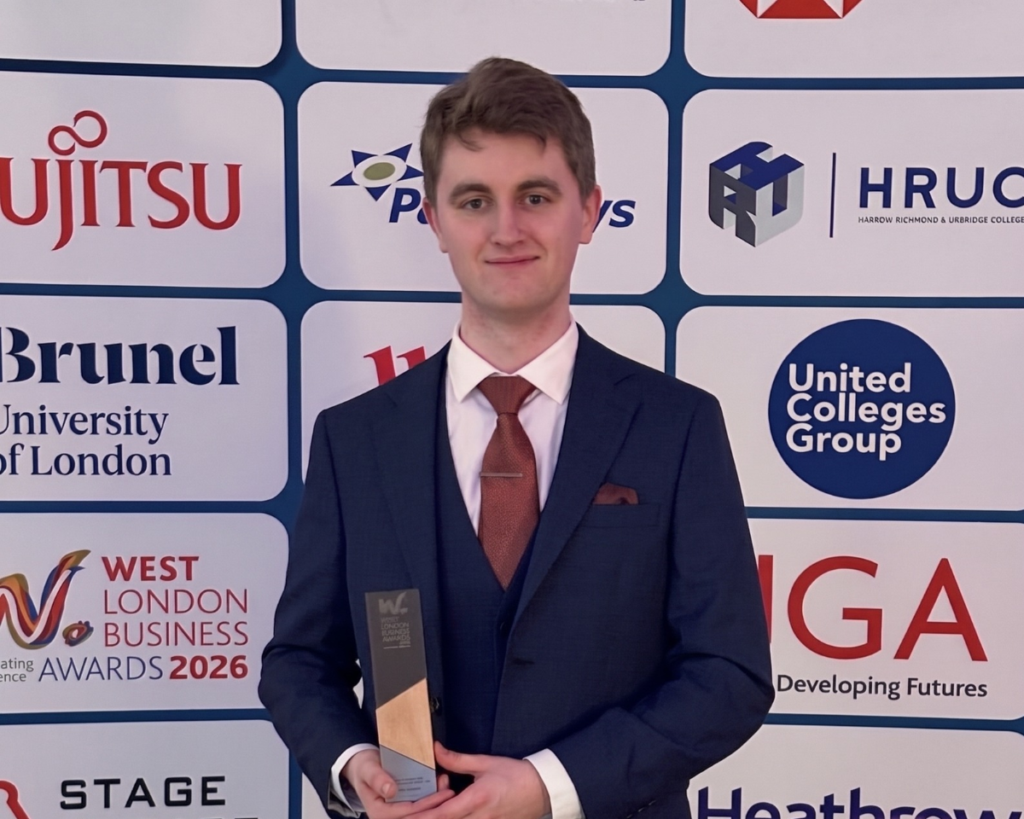
Robin Heagney had his sights set on a career in robotics. Telecommunications wasn’t part of the plan – and it took four months to persuade him to consider an apprenticeship with Shared Access. Now, having successfully completed his Level 3 Radio Network Technician apprenticeship, he’s working as a TDI Engineer, helping explore the technologies that could shape the company’s future.
Ask Robin Heagney whether he always wanted to work in telecommunications and you’ll get a fairly straightforward answer: absolutely not.
Before joining Shared Access, he was studying mechanical engineering at Bedford College, with plans to build a career in robotics.
“I never really saw myself going into this industry in the first place,” he admits. “It wasn’t on my roadmap.”
When someone suggested an apprenticeship opportunity at Shared Access, Robin wasn’t particularly enthusiastic. In fact, it took four months of encouragement before he agreed to give it a try.
And although his original career plans had taken an unexpected turn, Robin soon discovered there was a lot more to telecommunications than he’d imagined.
“It’s probably one of the best decisions I made.”
Discovering the world behind mobile connectivity
One of the biggest surprises for Robin was just how much engineering and technical expertise goes into something most of us take for granted.
“Mobile connectivity is just seen as a necessity these days. It’s just there,” he explains.
“Even though I’d grown up around the industry, I didn’t really know much about it or how any of it worked. Everything was new. It was like, wow, what is this? Why does that work?”
As part of Shared Access’s first apprenticeship cohort, Robin spent two and a half years combining practical experience with studying towards a Level 3 Radio Network Technician qualification through West Thames College.
The programme introduced him to different areas of the company’s in-building connectivity operations, including design, build, maintenance and future technologies.
That variety proved particularly important for someone who thrives on practical challenges.
“I need to be doing something new, something interesting. I can’t just sit there all day tapping away on my laptop.”
What has kept him interested is the sheer depth of knowledge involved.
“Every single day, I’m learning something new that I never knew about. I think it’s going to be like that for the next ten years.”
And he’s clearly impressed by the expertise of his colleagues.
“You’ve got some guys who work with us who blow my mind, and they’ve only talked for five minutes!”
From classroom theory to real-world innovation
Although Robin’s original ambition was to work in robotics, his mechanical engineering background has proved particularly useful.
One project brought together his existing skills, new technical knowledge and an opportunity to help develop something from scratch.
Working alongside Shared Access colleagues in the company’s Technical Development and Innovation (TDI) team, Robin helped design and build a portable private 5G system to support GiveVision, an assistive technology that helps partially sighted people experience live sport.
Shared Access had already developed a private 5G solution for GiveVision at Crystal Palace’s Selhurst Park. The challenge was to create a portable version that could be taken to other venues, opening up opportunities for more people to benefit from the technology.
Robin was involved in developing the physical equipment needed to make that possible.
“We built that box,” he explains. “The trolley that it sits on, the pole that’s attached to it, the vents, the fans, the power to it.”
And because the solution wasn’t something that could simply be bought off the shelf, the team had to design and fabricate components themselves.
“That’s where my mechanical engineering course helped. I was able to design it all, 3D model it and get it made.”
The result was a portable private 5G network that could be transported between venues, allowing clubs and stadium operators to trial the GiveVision technology before committing to a permanent installation.
For Robin, it’s a project that stands out, not least because of the difference the technology can make to the people using it.
“Getting it working and then taking it to venues around the country, and even to Paris, so people could experience the technology for themselves – that’s been my proudest moment.”
His achievements have also earned recognition beyond Shared Access.
At the 2026 West London Business Awards, held at Twickenham Stadium, Robin received a commendation as runner-up in the Apprentice of the Year (Under 30) category.
Building on that success, he has once again been named a finalist for the 2027 award, with the winner set to be announced at Twickenham Stadium in February.
A place to experiment
Having successfully completed his Level 3 Radio Network Technician apprenticeship, Robin is now working as a TDI Engineer within Shared Access’s in-building team, exploring new technologies and their potential applications.
It’s a role that seems particularly well suited to his curiosity and enthusiasm for practical problem-solving.
“Every day I’ve got to suss something out. I’ve got to break into it, then I’ve got to fix it again because I broke it in the first place!”
Behind that rather entertaining description is a serious purpose.
The team’s work includes exploring the potential of private 5G networks, testing new devices and identifying applications that could ultimately be developed into practical solutions for customers.
One example involved connecting a drone to a private 5G network to stream footage between devices without relying on conventional Wi-Fi connectivity.
For Robin, the appeal lies in having a technical challenge to solve, but also the freedom to explore different approaches.
“There’s a direction from the company about what they want us to do, but we’re given free rein on how we do that.”
It’s also a reflection of Shared Access’s approach to developing its people. Rather than expecting apprentices to follow a predetermined career path, the company gives them opportunities to experience different disciplines, discover their strengths and find the roles in which they can make the greatest contribution.
For Robin, that meant recognising that although he enjoyed understanding the design process, spending his working day behind a screen wasn’t for him. He wanted to be hands-on, solving problems, testing ideas and putting his engineering skills to practical use.
Shared Access recognised those strengths and encouraged him to pursue a role that combined his technical abilities with his natural curiosity and enthusiasm for innovation.
“You’re not forced to try and change how you work. The role is matched to you.”
An unexpected career and plenty still to discover
Ask Robin what Shared Access stands for and his response is immediate.
“Engineering excellence.”
It’s a phrase that reflects the high standards he sees in the team around him and the ambition to keep improving what the company can deliver.
With his qualification now complete and a role in technical innovation, Robin is in a very different place from the student who reluctantly agreed to consider a telecommunications apprenticeship.
He’s also a strong advocate for the opportunities apprenticeships can offer, particularly for people who, like him, prefer practical learning.
“University and apprenticeships offer different routes to gaining qualifications and building a career. Neither is necessarily better than the other. It comes down to what suits you as an individual.”
For Robin, the opportunity to gain experience while learning has been invaluable.
“You’re thrown right into the role. There’s lots of moving around, there’s constant learning. And it’s hands-on.”
It’s hard to imagine a better fit for someone who originally had his sights set on robotics.
The career he spent four months trying to avoid has given him exactly what he was looking for: the chance to experiment, solve complex engineering challenges and turn ideas into working technology.
From designing equipment that’s helping partially sighted fans experience live sport to exploring what private 5G could make possible next, Robin has already come a long way from the student who wasn’t convinced telecoms was for him.
And he’s only just getting started.
Robin was one of four apprentices in Shared Access’s first intake. With a second cohort now underway, the programme is helping develop the next generation of technical talent across the company’s in-building connectivity operations.


