TBC.London
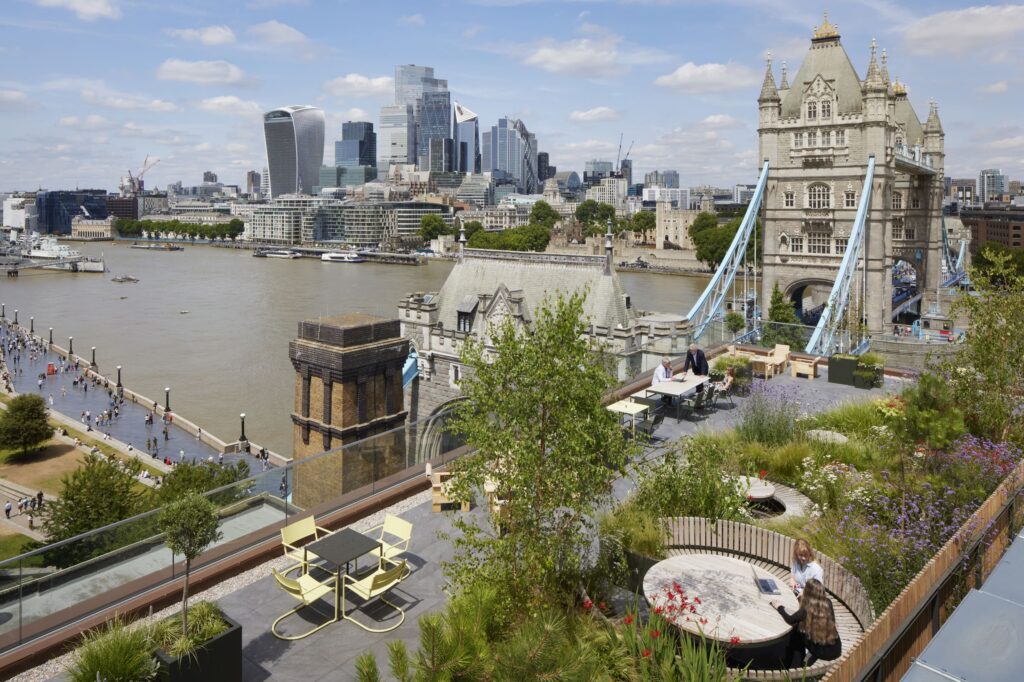
TBC.London sets a new benchmark for how high-performance office buildings are conceived and delivered.
Developed by FORE Partnership in collaboration with KKR, the building is a deep retrofit of a 1990s structure, reimagined as a fully electric, net zero carbon workplace.
Spanning approximately 110,000 sq ft, the building targets BREEAM Outstanding, WELL Platinum, NABERS 5* and WiredScore Platinum, positioning it as one of London’s most progressive, future-ready workspaces.
It reflects a clear shift in occupier expectations, where environmental performance, tenant experience and seamless connectivity are all fundamental to success.
“From a management perspective, having a single, structured and fully managed network environment makes a significant difference. It reduces complexity and allows us to focus on delivering the best possible experience for occupiers.”
Ivo Krastins, Associate Director
Integrated by design
Central to TBC.London is a fully integrated digital infrastructure delivered by Node and Shared Access, designed from the outset to support both building performance and occupier experience over the long term.
This project builds on a strong track record between FORE Partnership and Node, following previous developments at Windmill Green and Cadworks.
At TBC.London, the ambition was to go further, enhancing both the technical capability and long-term performance of the building’s digital infrastructure.
Node established the building’s digital backbone, with Shared Access integrating in-building mobile connectivity on top, creating a single, coordinated platform spanning fibre, Wi-Fi, smart systems and mobile.
“Node’s digital infrastructure gave us the foundation to deploy our platform quickly and reliably. Working side-by-side, we were able to combine digital backbone and user experience to create a seamless, future-ready environment that meets the needs of both operators and occupiers”
Dan Drogman, CEO, Smart Spaces
The challenge
FORE Partnership set out to create a building that operates as a single, high-performing system. That meant avoiding the fragmented approach seen in many buildings, where fibre, Wi-Fi, mobile and smart systems are delivered separately, evolve over time and create complexity behind the scenes.
The result of that model is well understood: inconsistent user experience, rising operational cost and infrastructure that quickly becomes difficult to manage.
At TBC.London, that approach was not acceptable.
The building needed to deliver:
- immediate, frictionless connectivity from day one
- seamless integration of smart building systems
- consistent performance across all connectivity types
- a model that reduced long-term complexity and avoided upfront capital investment
All of this had to be achieved within a highly specified retrofit, integrating advanced digital infrastructure into an existing structure while maintaining architectural integrity and meeting strict net zero targets.
“Our collaboration with Node shows how aligned infrastructure can drive both technical and commercial efficiency. Their pre-installed fibre backbone gave us a ready-made foundation for mobile deployment, allowing us to accelerate delivery, reduce disruption and optimise coverage throughout the building. It’s a powerful example of how joined-up thinking between specialist providers can enhance overall building performance.”
Sam Jackman, Chief Development Officer, Shared Access
The solution
Node established the foundation of the building’s digital infrastructure, delivering a pre-installed fibre backbone and converged network that acts as a single, secure and scalable platform for all building systems.
This unified digital environment brings together landlord-controlled services, including Wi-Fi, CCTV, access control, IoT, HVAC and voice, into one high-performance backbone. Rather than multiple parallel systems, the building operates on a single, structured network with clear ownership and accountability.
This approach delivers:
- one network owner, one set of standards and clear accountability
- higher resilience and consistent performance
- faster onboarding, with ISP access available in under 10 working days and no requirement for wayleaves
- reduced risk of obsolescence, supporting long-term ESG and wellness targets
- a scalable platform designed to evolve over the building’s lifecycle
On top of this foundation, a fully managed converged network enables seamless interoperability between smart building technologies and occupier services.
The result
This integrated approach is delivering immediate and lasting value for FORE Partnership and its occupiers.
- Tenants can move in and connect from day one, with no onboarding delays or infrastructure challenges. Connectivity is consistent across fibre, Wi-Fi and mobile, ensuring a reliable experience throughout the building.
- For FORE Partnership, the benefits extend beyond day-one delivery. The absence of upfront CapEx, combined with structured, fully managed infrastructure, reduces long-term risk, avoids future remediation costs and protects asset value.
- The commercial impact is already clear. TBC.London has set a new benchmark for office rents in SE1, reinforcing the value of buildings that combine sustainability, experience and high-performance connectivity.
- Occupiers can also access ISP services in a matter of days, without the need for wayleaves, significantly reducing time to occupancy and operational friction. In shared environments such as the Blend Family food hall, resilient connectivity supports high volumes of users and digital transactions, reinforcing the building’s role as a community hub.
- Smart building systems operate within a single, unified environment, enabling more efficient management, better performance and a more responsive occupier experience.
Setting the direction for the market
TBC.London demonstrates how expectations for commercial real estate are evolving.
Sustainability, occupier experience and digital infrastructure are no longer separate considerations. They are fundamentally connected and each plays a critical role in long-term building performance.
By delivering structured, integrated and future-ready infrastructure from day one, Node and Shared Access have enabled TBC.London to meet those expectations, setting a new standard for how high-performance workplaces are delivered and operated.
Read our full case study HERE>
